

How to Make a Rap Song: Complete Step-by-Step Guide with Prompts & AI
Table of Contents
Key Takeaways
- Making a hit rap song requires three core components: a compelling Hook/Theme, structured 16-bar verses with dynamic rhyme schemes, and the right Subgenre Beat (BPM & Rhythm).
- Different rap subgenres serve different creative use cases — from high-energy Trap for workout and gaming, to smooth Boom Bap for storytelling and Lo-Fi for late-night vibes.
- You no longer need thousands of dollars in studio gear or years of audio engineering experience. With MemoTune's AI Rap Generator, you can turn your ideas and lyrics into full, release-ready rap tracks with studio vocals in under 60 seconds.
Whether you are an aspiring MC with a notebook full of punchlines or a content creator looking for original music for your videos, creating a polished rap track has never been more accessible.
This guide walks you through the exact process of making a rap song from concept to finished track, complete with subgenre prompt blueprints, lyric-writing formulas, and AI creation workflows.
1. Choose Your Rap Subgenre & Sound Palette
Before writing a single line, you must decide on your sonic identity. The subgenre dictates the tempo (BPM), drum bounce, mood, and vocal delivery style.
Here is a breakdown of the primary rap styles, their best use cases, and ready-to-use AI generation prompts:
| Subgenre | Typical BPM | Mood & Sound Characteristics | Best Use Cases |
|---|---|---|---|
| Modern Trap | 130–160 (half-time) | Heavy 808 sub-bass, rapid hi-hat rolls, dark minor synths | Workout playlists, gaming montages, club bangers, hype reels |
| Boom Bap / Old School | 88–98 | Punchy acoustic drums, vinyl crackle, jazz & soul samples | Storytelling, conscious rap, urban lifestyle, nostalgic vlogs |
| Melodic / Cloud Rap | 115–135 | Atmospheric pads, reverb-soaked Auto-Tune hooks, emotive chords | Heartbreak songs, introspective thoughts, late-night driving |
| UK / NY Drill | 140–145 | Sliding 808 glides, syncopated ghost snares, dark ominous bells | High-intensity action, gym motivation, gritty street energy |
| Lo-Fi Hip-Hop | 70–85 | Dusty Rhodes piano, warm vinyl rain, relaxed unquantized drums | Study sessions, coffee shop chill, relaxing background music |
Subgenre Production Blueprints & Prompts
1. Modern Trap (Hype & Energy)
- Vocal Style: Confident, rhythmic, triplet flow with punchy ad-libs.
- Best Used For: Fitness motivation, TikTok reels, competitive gaming videos.
- Prompt Template:
Dark aggressive Atlanta trap, 140 BPM, heavy distorted 808 bass, rapid rolling hi-hats, hard-hitting kick, confident male rap vocals about ambition and success, studio mix - 👉 Try It: Generate Modern Trap Rap →
2. 90s Boom Bap (Storytelling & Flow)
- Vocal Style: Dynamic cadence, crisp diction, multi-syllabic rhyme schemes.
- Best Used For: Lyrical showcases, personal narratives, retro urban aesthetic.
- Prompt Template:
90s East Coast boom bap, 92 BPM, dusty vinyl crackle, soulful jazz piano chops, punchy kick and crisp snare, introspective lyrical flow, organic underground hip-hop vibe - 👉 Try It: Create Boom Bap Hip-Hop →
3. Melodic Rap (Emotion & Melody)
- Vocal Style: Blended singing-rapping with melodic hooks and vocal layers.
- Best Used For: Emotional themes, relationship stories, pop-crossover playlists.
- Prompt Template:
Emotional melodic rap, 125 BPM, lush atmospheric synth pads, heavy 808s, auto-tuned expressive vocal hook with smooth rap verses, melancholic and catchy - 👉 Try It: Explore Melodic Rap Styles →
4. Lo-Fi Hip-Hop (Chill & Aesthetic)
- Vocal Style: Laid-back, intimate, spoken-word or relaxed cadence.
- Best Used For: Focus music, study vlogs, relaxed background tracks.
- Prompt Template:
Mellow lo-fi hip hop, 80 BPM, warm electric piano chords, soft drum groove, vinyl rain textures, laid-back casual male rap delivery, cozy late-night mood - 👉 Try It: Make Lo-Fi Hip-Hop Tracks →
2. Structure Your Rap Song (The Industry Formula)
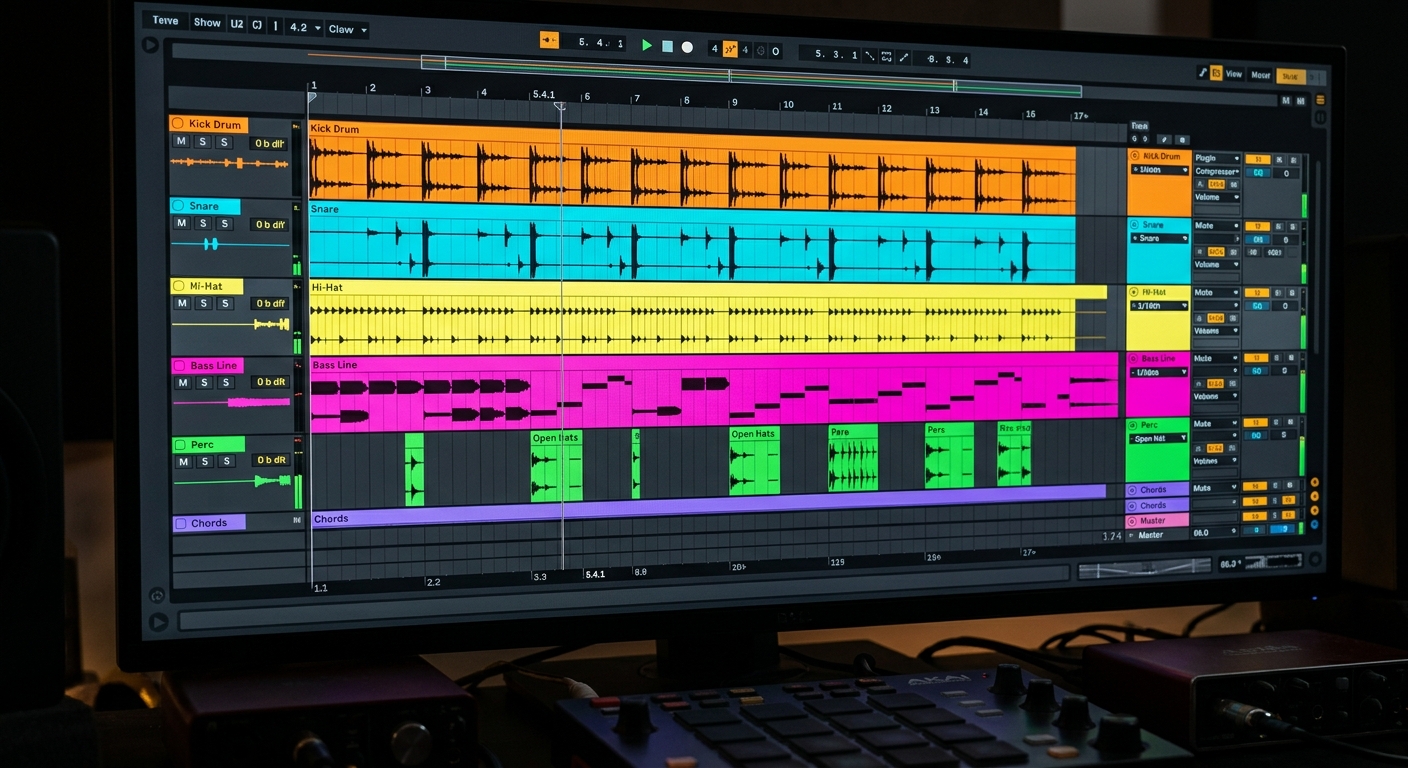
A strong song structure gives listeners familiar landmarks while keeping energy flowing from start to finish. Most commercial rap songs follow a bar-based structure (where 1 bar = 4 beats in 4/4 time).
Standard 3-Minute Rap Structure:
[Intro]        4–8 Bars   → Sets mood, introduces main melodic hook or beat drop
[Verse 1]      16 Bars    → Establishes story, characters, and intricate wordplay
[Pre-Chorus]   4 Bars     → Builds harmonic tension and rhythm anticipation (optional)
[Hook/Chorus]  8 Bars     → Catchy, repetitive central theme and vocal melody
[Verse 2]      16 Bars    → Deepens narrative, escalates energy, punchline-heavy
[Hook/Chorus]  8 Bars     → Reinforces the memorable chorus
[Bridge/Outro] 8 Bars     → Variation in flow/beat, fade out or decisive ending
3. Write Compelling Rap Lyrics: Formulas & Rhyme Schemes
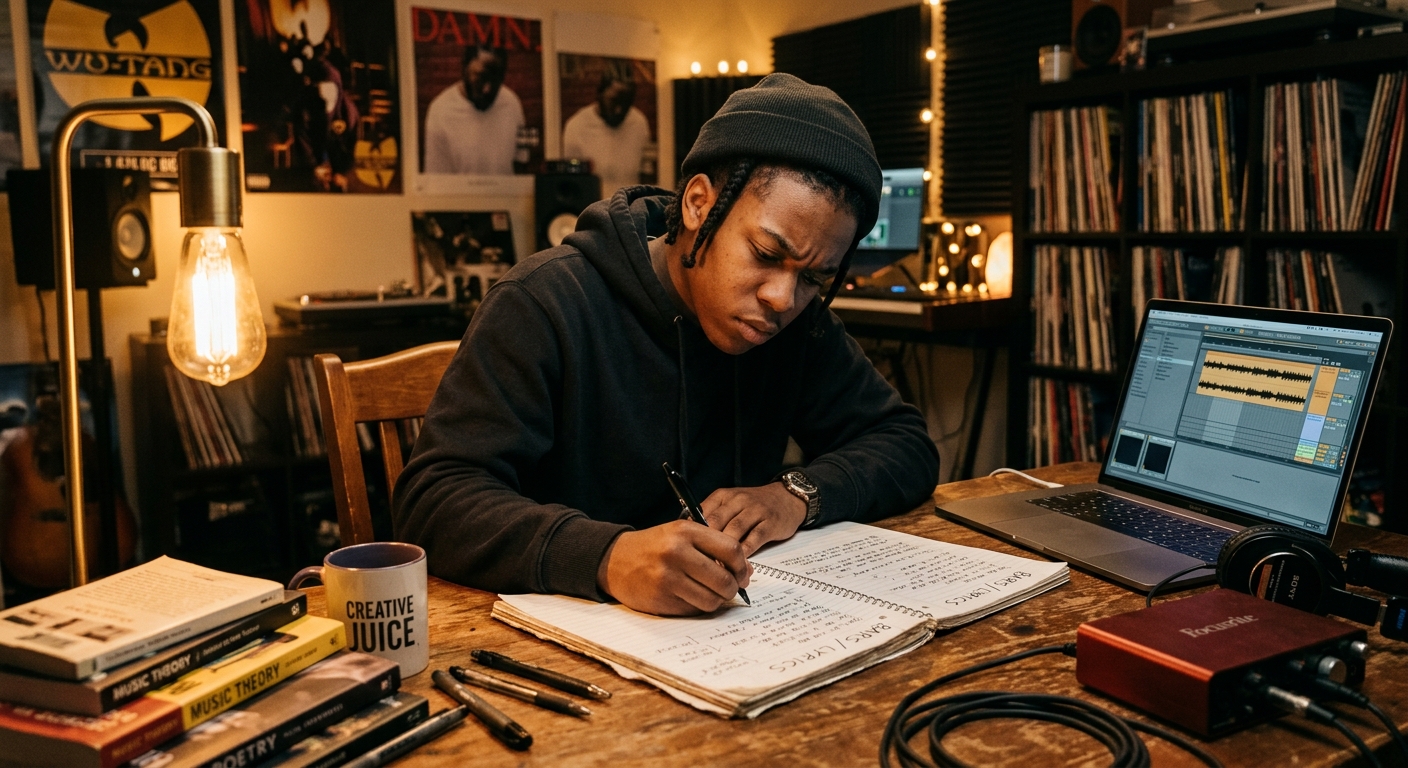
Great rap lyrics combine rhythmic timing, vivid imagery, and clever rhyme schemes.
1. Start with the Hook (Chorus)
The hook is the emotional core and catchiest line of your track. If your hook is weak, nobody stays for the verses. Keep it between 2 to 4 repeated lines with a singable cadence or infectious chant.
Need lyric inspiration? Use MemoTune's AI Lyrics Generator to generate rhymes, themes, and complete verse-chorus layouts in seconds.
2. Master Multi-Syllabic Rhymes
Beginner rappers only rhyme the final syllable (cat / hat). Advanced rappers rhyme multiple syllables across phrases to create smooth, complex flows:
- Example: "City lights shining" rhymed with "Gritty nights grinding" (3 matching syllable sounds).
3. Practice Internal Rhyming
Place rhyming words in the middle of lines rather than waiting for the end of the bar. This keeps listeners hooked on your cadence:
"I step in the zone, sitting on a throne, never pick up the phone when the drama is blown."
4. Vary Your Flow (Cadence)
Alternate between rapid 16th-note flows (triplets) and relaxed, syncopated phrasing. Leaving small pauses (rests) in your bars gives your words room to hit with maximum impact.
4. How to Make a Full Rap Song with AI (Step-by-Step)
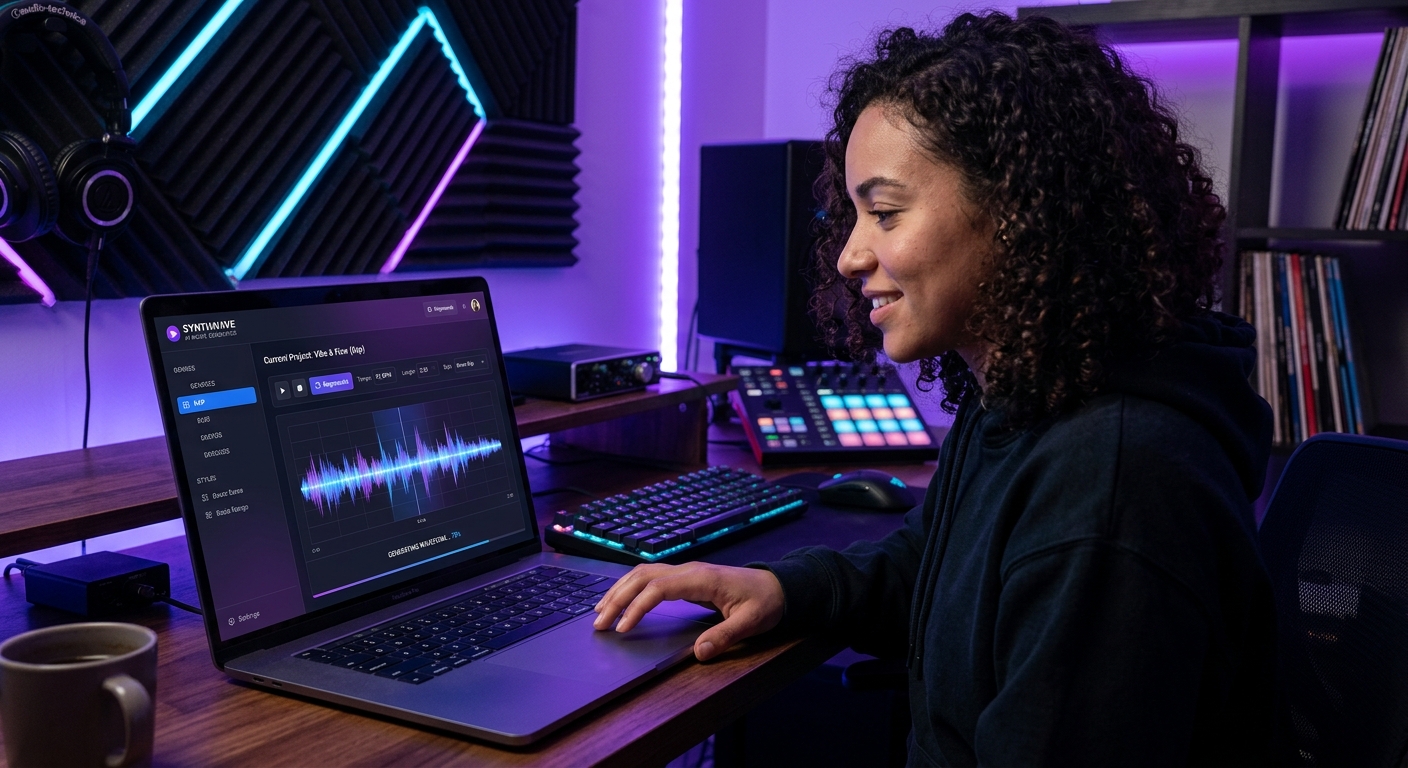
With modern AI tools, you do not need expensive recording studios, audio interfaces, or mixing engineers. You can generate a radio-ready rap song featuring full vocals and customized beats in 4 simple steps:
Step 1: Draft Your Lyrics or Prompt
Choose whether you want to provide custom lyrics or let the AI write them:
- If you have written your own bars, head directly to Lyrics to Song.
- If you have a theme or mood in mind, go to the AI Rap Generator or AI Song Maker.
Step 2: Configure Style, Tempo & Vocal Tone
Select your subgenre (e.g., Trap, Boom Bap, Melodic Rap), set your desired BPM (80–150), and specify vocal characteristics (e.g., gritty baritone, smooth melodic tenor, energetic female MC).
Step 3: Generate and Audition
Click Generate. In 30 to 60 seconds, MemoTune creates complete, studio-mixed audio renditions with verse-chorus arrangements, balanced 808s, and realistic vocal cadence.
Step 4: Extend, Polish & Export
- Need more verses? Use the AI Song Extender to add extra sections or a bridge.
- Want the beat only or acapella? Use the AI Vocal Remover to split your track into clean vocals and instrumental stems.
- Download in lossless audio ready for Spotify, YouTube, Apple Music, or your social media videos.
Common Mistakes to Avoid
- Sacrificing Meaning for Rhymes: Never write a nonsensical line just to force a rhyme. Clear storytelling always beats empty wordplay.
- Ignoring the Snare on Beat 3 (Half-Time): In modern trap, the accent lands on beat 3. Align your vocal punchlines with the snare to hit the groove naturally.
- Overcrowding the Syllables: If you have to rush your words awkwardly to fit the bar, cut out filler words like "and", "then", or "really".
- Neglecting Vocal Delivery & Emotion: Rap requires conviction. Even the best lyrics fall flat if delivered with monotone energy. Match your vocal dynamics to the mood of the beat.
FAQ
Q: Can I create a rap song if I can't rap or sing myself? Yes. Using MemoTune's Lyrics to Song, you can paste your written lyrics, select a vocal style (e.g., aggressive male rapper, smooth female vocalist), and the AI will perform and record the track with authentic flow and pitch.
Q: What is the best BPM for a beginner rap song? For traditional hip-hop and boom bap, 90–95 BPM is ideal because it provides ample space for clear pronunciation. For modern trap, 140 BPM (with a 70 BPM half-time feel) gives a bounce that is easy to write to.
Q: Can I monetize and distribute rap songs made with AI? Yes. Tracks generated under an active MemoTune Premium plan include commercial rights, allowing you to publish to Spotify, YouTube, TikTok, Apple Music, and streaming platforms. Check the Pricing page and Terms of Service for full license details.
Q: How do I separate the beat from the vocals on my generated rap song? You can use the built-in AI Vocal Remover to isolate the instrumental beat or acapella vocal track with a single click.
Create Your First Rap Song Today
Creating a rap song used to require expensive gear, studio booking fees, and years of mixing practice. Today, all you need is a creative spark.
Whether you want to produce hard-hitting trap bangers, soulful 90s boom bap, or emotional melodic anthems, MemoTune puts a full AI production studio at your fingertips.
Table of Contents
Author

Categories
Tags
Keep Creating
Use these related tools, styles, and scenes to put the ideas in this guide into practice.

AI Rap Lyrics Generator
Free AI-powered rap lyrics generator and rap song maker.

AI Hip Hop Generator
AI-powered hip hop song generator that creates complete tracks with beats, vocals, and lyrics.
AI Song Maker
AI-powered song creation tool that generates complete music tracks with vocals or instrumentals from text prompts or lyrics.
ToolMore Posts

150 Rap Song Ideas: Topics, Stories, and Hook Starters
Explore 150 rap song ideas across personal stories, fictional worlds, parties, and playful battles, then turn one topic into an original hook and verse.

108 Words to Describe Music: Meanings and Prompt Examples
Find 108 words to describe music, grouped by mood, rhythm, timbre, arrangement, and vocals, with examples you can turn into clearer music prompts.

How to Create Songs Online: Step-by-Step Guide for Beginners (2026)
Learn how to create songs online step by step. This beginner guide covers lyrics, music styles, AI vocals, and free tools to make your first song today.